

 Muhammad Naeem
One of the most renowned Urdu poets of the 20th century was Qateel Shifai, who was born Muhammad Aurangzeb in Haripur, Pakistan. He made a name for himself in contemporary Urdu writing thanks to his romanticism and skill as a lyricist. His pen name, “Qateel,” which translates to “murdered,” reflects his strong affinity for themes of loss and love.
جب بھی آتا ہے مرا نام ترے نام کے ساتھ
جانے کیوں لوگ مرے نام سے جل جاتے ہیں
Qateel Shifai made substantial contributions to Urdu poetry, music, and ghazals over many years, fusing heritage with contemporary views. Because of their simplicity, profundity, and musicality, his lines are still beloved today.
His talent developed via self-study and persistence, even though he had no official literary education. His early writing, which focused on themes of love, hopelessness, and beauty, was reminiscent of traditional ghazals.
Qateel Shifai Poetry in Urdu
One of the pivotal moments in Qateel Shifai’s career was his debut in the film industry. In the 1940s, he started penning lyrics for Indian and Pakistani films, to great praise. His songs were noteworthy because of his ability to convey feelings through words. *”Hum Bhi Musafir Tum Bhi Musafir”* is one of his many timeless hits.
His connection to the movie industry enabled people outside the literary community to read his poems.
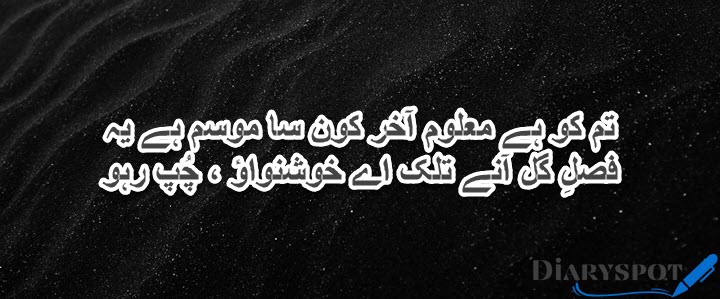
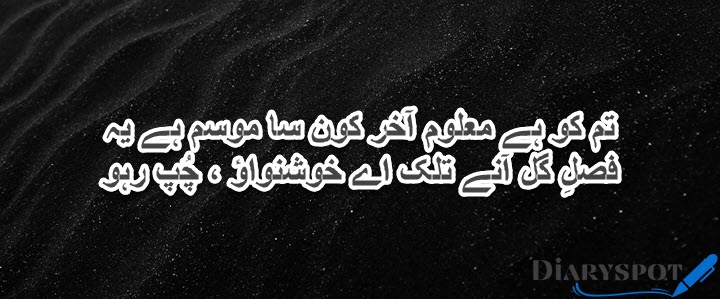
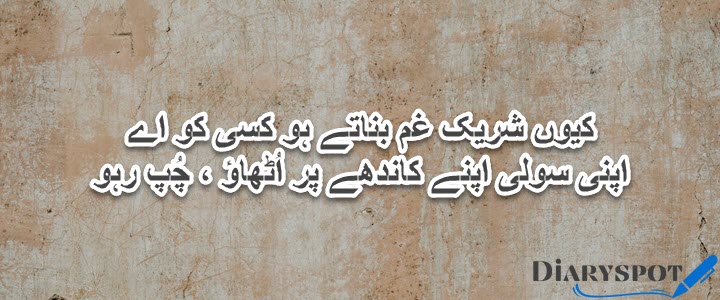
چھٹ گئے حالات کے بادل تو دیکھا جائے گا
وقت سے پہلے اندھیرے میں نہ جاو ، چُپ رہو
The beauty of classical and contemporary Urdu shayari lies in its universal resonance. If you find solace in these verses, explore the profound artistic depth of Nasir Kazmi Poetry in Urdu, alongside the poignant lyrical expressions in Munir Niazi Poetry in Urdu and Kashmir Poetry in Urdu.
The beauty of classical and contemporary Urdu shayari lies in its universal resonance. If you find solace in these verses, explore the profound artistic depth of Nasir Kazmi Poetry in Urdu, alongside the poignant lyrical expressions in Munir Niazi Poetry in Urdu and Death Poetry in Urdu.
دیکھ لینا، گھر سے نکلے گا نہ ہمسایہ کوئی!
اے مرے یارو، مرے درد آشناؤ ، چُپ رہو
One of the main themes in Qateel Shifai’s poetry was romanticism. His poetry praised love in all of its manifestations, including spiritual, unrequited, and eternal. His exceptional ability to elegantly and simply convey the essence of love is seen in lines like *”Dil ke afsane nigahon ki zubaani pahunche”*.
Readers and listeners found great resonance in Qateel’s romantic poetry, which provided comfort and a sense of community during both happy and sad moments.
Sabne pehna tha baRe shouq se kaghaz ka libas
Jis qadar log the barish mein nahaane wale
Mar gaye hum to ye katbay pe likha jaayega
So gaye aap zamaane ko jagaane wale
Qateel Shifai 2 Line Poetry
The poetic style of Qateel Shifai was distinguished by its profound simplicity and lyrical brilliance. Even people who are not familiar with intricate literary traditions may find his poetry intriguing because he used simple language to express strong feelings. His lines’ emotional effect was increased by his skill with metaphors and images.
His writings, whether in songs or ghazals, had a melodic cadence that enthralled both readers and listeners.


Qateel Shifai skilfully combined the conventional topics of classical Urdu poetry with modern concerns. His poetry tackled contemporary issues while maintaining the form and cadence of classical ghazals. For example, he frequently emphasized existential issues, the intricacy of interpersonal interactions, and social conventions in his writings.
This creative strategy helped to bridge the divide between the younger and older generations by making his poems approachable to a wider audience.
بند ہیں سب میکدے، ساقی بنے ہیں محتسب
اے گرجتی گونجتی کالی گھٹاؤ ، چُپ رہو
سوچ کی دیوار سے لگ کر ہیں غم بیٹھے ہوئے
دل میں بھی نغمہ نہ کوئی گنگناؤ ، چُپ رہو
Nikal kar dair-o-kaa’ba se agar milta na maiKhaana
To Thukraaye hue insaaN Khudaa jaane kahaaN jaate
Qateel Shifai Best Poetry
Qateel Shifai won multiple awards for his contributions to Urdu literature and film during his storied career. In 1994, he received Pakistan’s Pride of Performance award, which acknowledged his enormous influence on the country’s literary and cultural legacy.
He further cemented his reputation as a skilled poet and lyricist by cooperating with Indian artists and gaining recognition for his work abroad.
رات کا پتھر نہ پگھلے گا شعاعوں کے بغیر
صبح ہونے تک نہ بولو ہم نواؤ ، چُپ رہو
Tumhaari be-ruKhii ne laaj rakh lii baada-Khaane kii
Tum aaNkhoN se pilaa dete to paimaane kahaaN jaate
Chalo achchhaa huaa kaam aa gaiyi diivaangi apnii
Vagar na ham zamaane bhar ko samjhaane kahaaN jaate
Beyond his lifetime, Qateel Shifai’s impact continued to inspire poets and lyricists of today. His creative method of fusing romance with social concerns established a standard for the next generations. Many contemporary Urdu poets acknowledge his influence on the genre and give him credit for their creative awakening.
سسکیاں لیتی ہوئی غمگین ہواؤ، چُپ رہو
سو رہے ہیں درد، ان کو مت جگاؤ، چُپ رہو
apnaa muqaddar Gham se be-gaanaa agar hota
To phir apne paraaye ham se pahchaane kahaan jaate
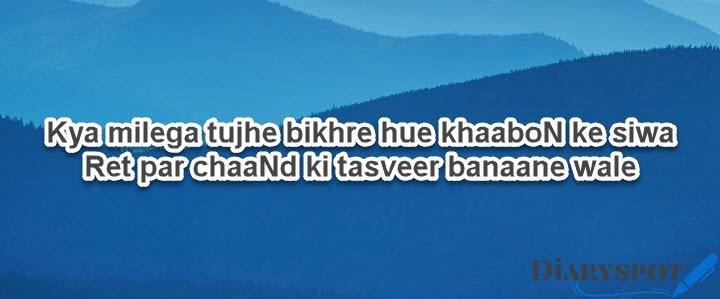
Dar O deewar pe hasrat si barasti hai
Jaane kis des gaye pyaar nibhaane wale
Kam kam kaho, sanbhal ke kaho, shaan se kaho
Roodaad e shouq zabt ke unwaan se kaho
Is men kuchh apne pyaar ki izzat ka hai sawaal
Aa jaaye raah par dil e naadaan se kaho
Poetry by Qateel Shifai is proof of the timeless power of language. He is a titan of Urdu literature because of his capacity to arouse strong feelings with straightforward yet exquisite sentences. His work, whether in ghazals or movie songs, appeals to poetry and art enthusiasts worldwide since it cuts beyond cultural and chronological barriers.
In addition to being a compilation of poetry, Qateel Shifai left behind a wealth of feelings that still uplift and unite people.
Also, explore our soulful collection of Tanhai Poetry in Urdu and Chand Poetry in Urdu.
For readers who appreciate these expressive thoughts and find solace in poetic contemplation, you will also deeply enjoy exploring our related collections in Mohsin Bhopali Poetry in Urdu, Khalid Sharif Poetry in Urdu, Nasir Kazmi Poetry in Urdu.


Add comment